Home Insurance During Renovations and Extensions
A renovation changes your home twice over from an insurance perspective: once while the work is happening, and again once it is finished and your sum insured needs to reflect the result.
Tell your insurer before work begins, not after
Our main guide to home insurance in Ireland covers this briefly: standard cover can be restricted or excluded during construction unless your insurer has agreed otherwise, so significant work needs to be flagged before it starts, not once it is underway or, worse, after something has already gone wrong. This applies to a full extension or loft conversion, and it is worth checking with your insurer even for work that feels more moderate, such as a structural alteration to an internal wall, since what counts as significant is a question for your specific insurer to answer, not an assumption to make yourself.

Why cover can change during construction
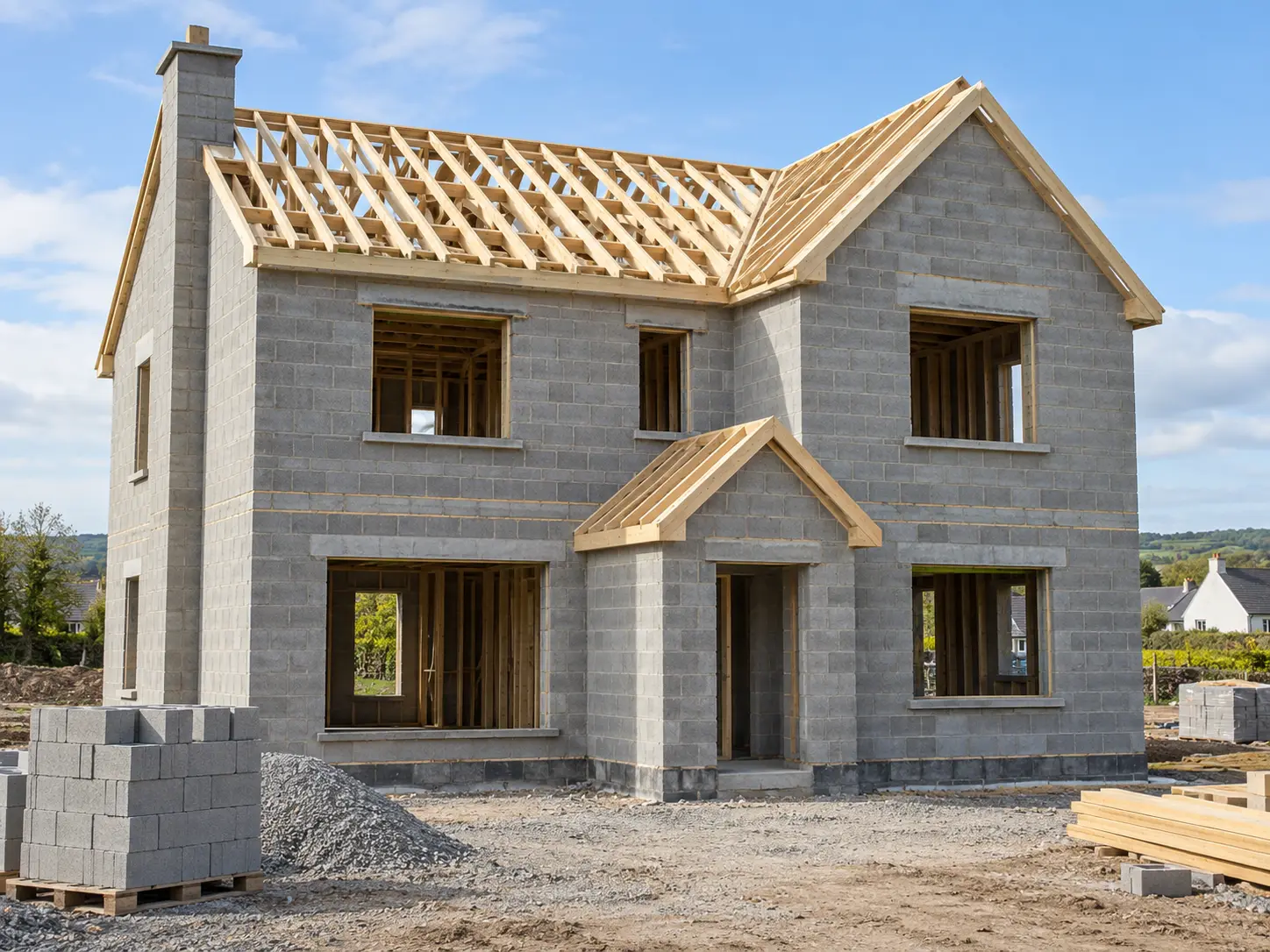
A home undergoing structural work carries a different risk profile than one in normal daily use. An open roof, a removed wall, scaffolding, building materials stored on site, and contractors and their equipment on the property all change what could plausibly go wrong, compared with the risks a standard policy is priced and written around. This is why insurers commonly ask about renovation work specifically and may apply conditions, exclusions or an adjusted premium for the duration of the project, rather than leaving standard cover unchanged throughout.
A yes or no answer to "am I covered during renovations" is less useful than knowing exactly what changes. Ask your insurer directly what conditions apply to security and occupancy during the work, whether any specific perils are excluded while the property is in a construction state, and whether these conditions apply to the whole property or only to the area being worked on.
Contractor insurance is separate from your own policy
Your home insurance policy protects you as the homeowner. It is not a substitute for your contractor holding their own appropriate insurance, commonly including public liability cover and cover for the work itself while it is in progress, sometimes referred to as contract works insurance. Before work begins, ask your contractor directly for evidence of their current insurance, and confirm with your own insurer whether they expect to see this as a condition of maintaining your cover during the project. A gap here, where neither policy clearly covers an incident during construction, is exactly the kind of situation worth ruling out in advance rather than discovering during a claim.
If the property becomes unoccupied during the work
Major renovation work sometimes means moving out of the property temporarily, whether for safety or because parts of the home are unusable. Most policies place restrictions on cover once a property has been left unoccupied beyond a set period, and a threshold designed around an ordinary empty house is not necessarily well suited to a home mid renovation. If you expect to be away from the property for any length of time during the work, tell your insurer specifically about both the renovation and the vacancy, since these are two separate things your insurer needs to know about, not one combined circumstance that a single mention covers.
Updating your sum insured once the work is finished
An extension, attic conversion or other structural addition increases your home's rebuild cost, and a buildings sum insured that was accurate before the work will understate it once the work is done. Our guide to how to calculate your home rebuild cost covers how to work out this figure properly. Once your project is complete, treat recalculating and updating your buildings sum insured as one of the final steps of the renovation itself, not a separate task to get to later, since an outdated figure risks the average clause our main guide describes reducing a future claim payout, including on a claim entirely unrelated to the new work.
Keep your planning permission documents and a completion certificate or similar evidence that the work was finished and, where applicable, signed off, since an insurer may request these when you update your policy or in the event of a future claim.
Compare home insurance after your renovation
Compare cover, excesses and policy terms, then confirm the insurer knows about the completed work and that your buildings sum insured reflects it before you buy.
When the renovation is itself a home upgrade project
Some renovations covered by this guide are the same projects covered elsewhere on this site as home upgrades. For a bathroom renovation, new kitchen or single-storey extension, our renovation cost calculator provides an indicative estimate to help you plan your budget. If your extension or renovation includes upgrading insulation or replacing windows and doors, our guides to insulation in Ireland and windows and doors in Ireland cover what the work itself involves, while this article covers what your insurer needs to know about it happening. The two are worth reading alongside each other if insulation or window work is part of a wider renovation project, since the insurance conversation and the construction planning are happening on the same timeline. If the work includes fitting solar panels, our guide to solar panels and home insurance covers what to ask your insurer before the installation and how it may affect your buildings sum insured.
Before, during and after a renovation or extension
- Tell your insurer before significant work begins, not once it is underway
- Ask specifically what security or occupancy conditions apply while work is in progress
- Confirm your contractor holds appropriate insurance for the project, separate from your own policy
- Tell your insurer separately if the property will also be left unoccupied during the work
- Recalculate and update your buildings sum insured once the work is complete
- Keep planning permission and completion documents in case your insurer requests them
For the full picture of underinsurance, excesses and what to prepare before you compare cover, see our main guide to home insurance in Ireland, or read our guide to buildings and contents insurance: what each covers for how an extension changes what needs to be insured under each.