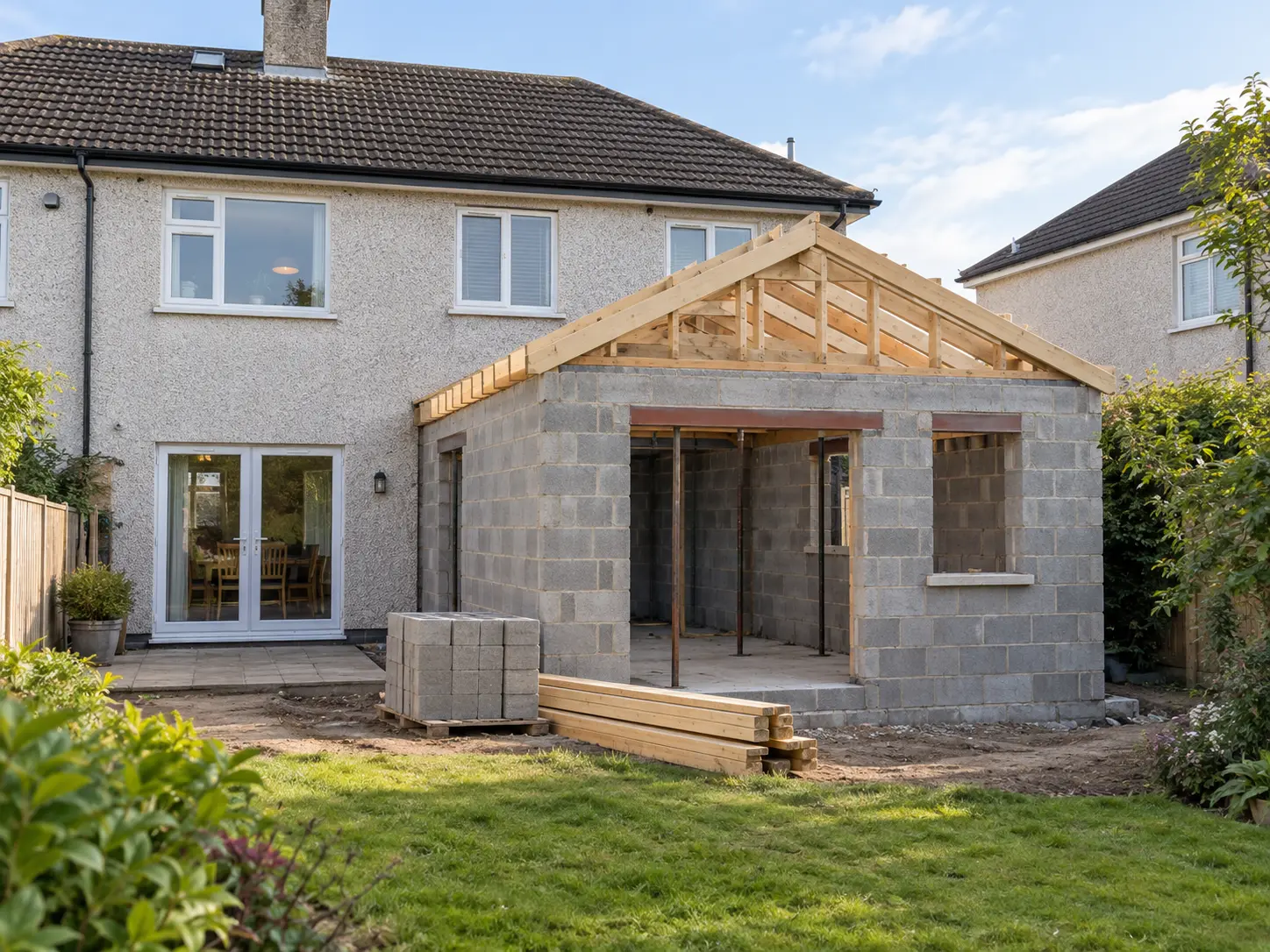
How to Calculate Your Home Rebuild Cost in Ireland
A rebuild cost is not a figure you already know from buying or valuing your home. It has to be worked out separately, and getting it wrong in either direction has real consequences for a claim.
Why this figure has to be calculated, not looked up
Our main guide to home insurance in Ireland explains why rebuild cost, not market value or purchase price, is what a buildings sum insured should reflect. This article is about the practical side: how to actually arrive at a defensible rebuild cost figure for your own property, and how to tell whether your home is the kind a standard calculator can handle or whether it needs a professional valuation instead.
Start with the SCSI calculator, if your home is a standard type
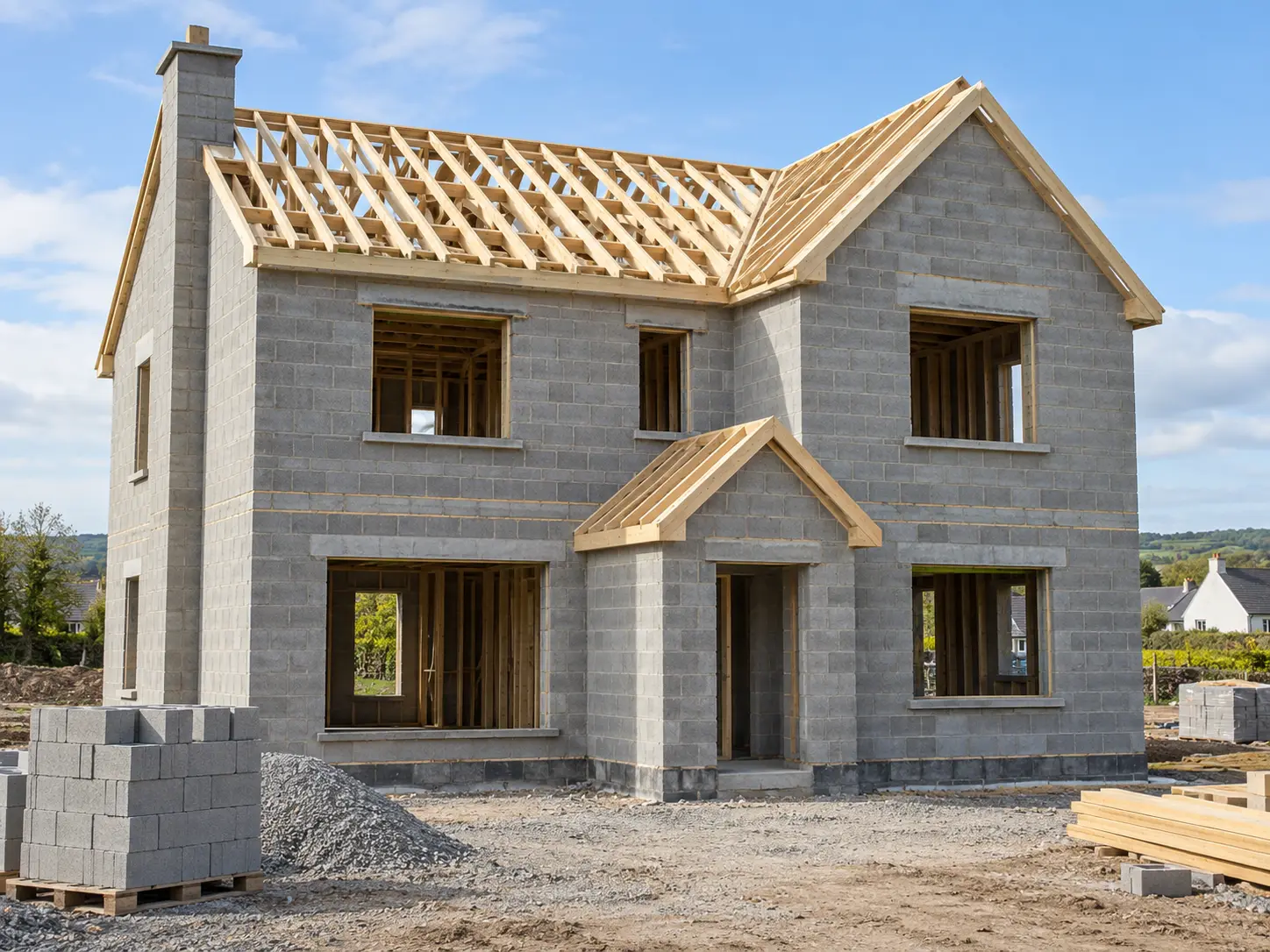
The Society of Chartered Surveyors Ireland publishes a house rebuild cost calculator intended for standard estate-type houses built in Ireland from the 1960s onwards. It is designed to give a base estimate by working through details of your specific property, such as its floor area, type and standard of finish, rather than a single national average figure applied to every home. As a reference point, the SCSI's House Rebuilding Guide published in November 2025 put the minimum base cost of rebuilding a typical 98 square metre three bed semi in Dublin at €331,340, or €3,381 per square metre. Costs differ by region and property, and the SCSI updates its guide each year, so use the calculator for your own home rather than this single example.
The calculator's stated methodology allows for demolition costs and professional fees as part of a genuine rebuild, alongside the different tax treatment that applies to building costs and to professional fees. It also allows for reinstating a concrete path around the house, a driveway, re-grassing and fencing, since these are part of putting a property back to its previous condition, not extras.
What the calculator explicitly does not cover
Contents, such as carpets, curtains and furniture, are not part of a rebuild cost figure at all, since these belong to contents insurance, covered separately in our guide to buildings and contents insurance: what each covers. The calculator's base figure excludes outbuildings by default, though it lets you select a garage allowance as one of the questions it asks, so a garage is only included if you actively choose that option. Anything beyond a garage, such as a shed or other outbuilding, still needs to be added separately using your own best estimate of what rebuilding it would cost.
More significantly, the calculator does not cover every type of property. It excludes homes with more than three storeys, homes with a basement, bespoke or architect designed properties, period homes such as Victorian or Georgian houses, thatched properties, and apartments. If your home falls into any of these categories, the calculator is not the right tool, and a professional valuation from a qualified surveyor is the appropriate route instead, since these types of property do not follow the standard cost patterns the calculator is built around.
Even for a standard property that the calculator is designed for, its output is described as a base estimate rather than a substitute for professional advice on an unusual property, an older building with non-standard construction, or a home that has had significant alterations. If you have any doubt about whether your property is genuinely standard, or if an insurer or mortgage lender specifically requests a certified valuation, use a qualified surveyor rather than relying on the calculator alone.
Working through the calculation in practice
In practice, working out a rebuild cost estimate means gathering a small set of facts about your property before you sit down with the calculator or a surveyor: its approximate floor area, its construction type and standard of finish, the number of storeys, and whether it has any features that push it outside a standard estate-type profile, such as a converted attic, a basement, or an architecturally unusual layout. Have this information ready rather than guessing at the calculator's prompts, since a rough guess produces a rough figure, and the entire point of doing this properly is to avoid the underinsurance risk our main guide describes under the average clause.
Compare home insurance once you have a rebuild figure
Compare cover, excesses and policy terms, then check that the buildings sum insured on each quote reflects your rebuild cost estimate before you buy.
Updating the figure, not just calculating it once
A rebuild cost is not a one time calculation. Construction costs change over time, so a figure calculated several years ago can understate what rebuilding would actually cost today, even without any changes to the property itself. It is also directly affected by any extension, conversion or significant structural work, since adding floor area increases what would need to be rebuilt. If you're planning an extension, you can estimate the cost of an extension separately using our renovation cost calculator. Our guide to home insurance during renovations and extensions covers what to do about your sum insured once work like this is complete, and it is worth treating an updated rebuild cost as part of finishing the project, not an afterthought. The same applies to permanently fitted equipment, such as a rooftop solar system, and our guide to home insurance for solar panels explains why it is worth asking your insurer whether the panels, inverter and any battery should be reflected in your figure.
Before you calculate or update a rebuild cost
- Confirm your home is a standard estate-type property built from the 1960s onwards, or that it falls into a category needing a professional valuation instead
- Gather your approximate floor area, construction type and number of storeys
- Note any features that make the property non-standard: a basement, more than three storeys, a period or bespoke design
- Select the calculator's garage allowance if you have one, since it is only included when you choose that option, and add a separate estimate for any other outbuilding
- Keep contents out of this figure entirely, since they are insured separately
- Recalculate after any extension, conversion or significant structural work, and periodically even if nothing has changed, since building costs move over time
For how this figure interacts with underinsurance and the average clause if it is ever wrong, see our main guide to home insurance in Ireland, or read our guide to buildings and contents insurance: what each covers for how rebuild cost fits alongside a separate, realistic contents figure.