
Buildings and Contents Insurance: What Each Covers
The line between buildings cover and contents cover feels obvious until you reach a fitted kitchen, a garden shed, or a bicycle worth more than you expected. Here is where that line actually sits.
The basic split, and why it still causes confusion
Our main guide to home insurance in Ireland sets out the basic distinction: buildings insurance covers the structure of your home, contents insurance covers what you would take with you if you moved out. That test, would you take it with you, is a genuinely useful rule of thumb, but a number of everyday items sit close enough to the line that it is worth working through them directly rather than guessing.
Buildings cover: the structure and what is fixed to it
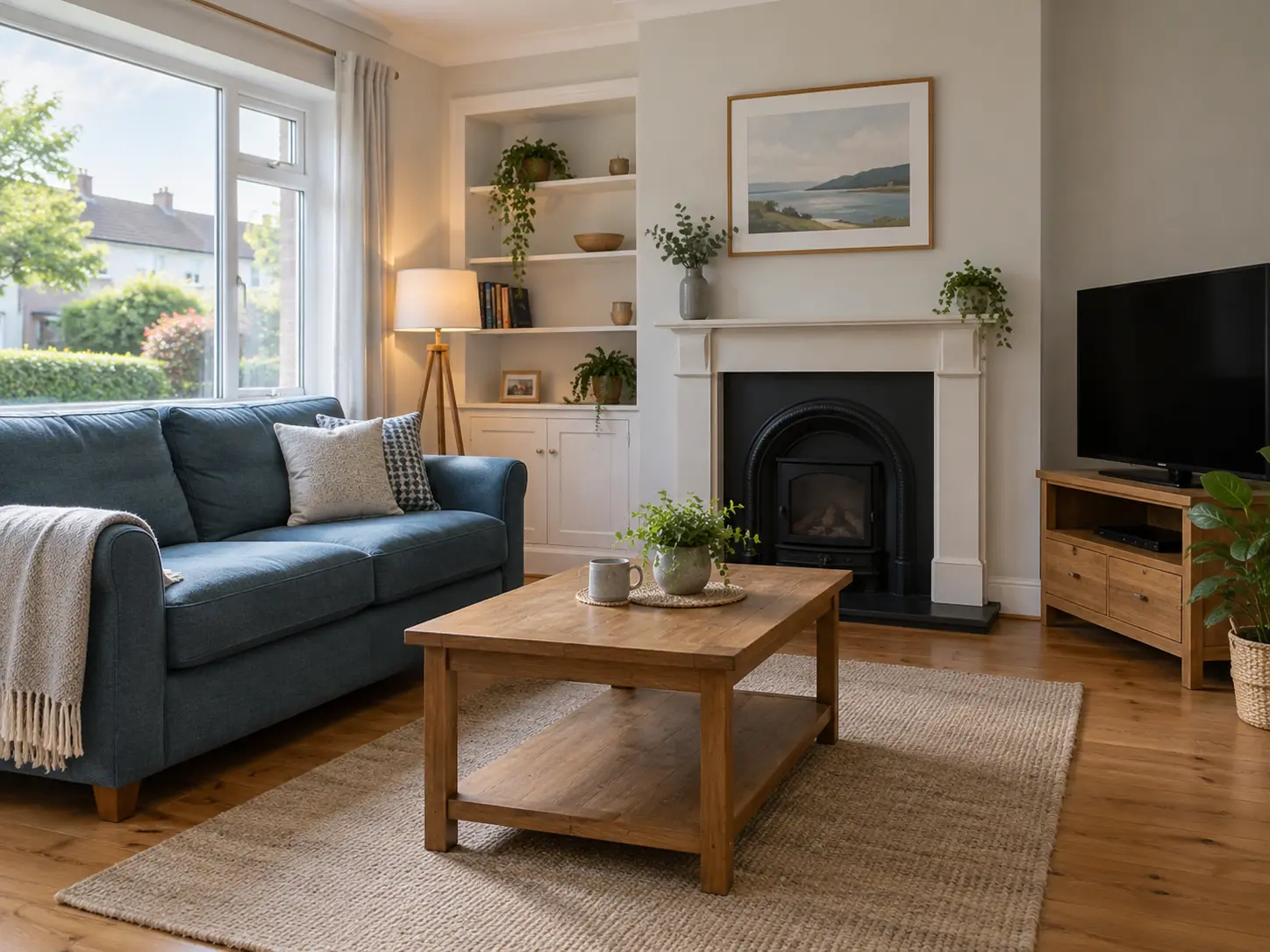
Buildings insurance covers the physical structure itself, walls, roof, floors and ceilings, along with permanent fixtures that would stay behind if you sold the property. Fitted kitchens and bathrooms are treated as part of the building precisely because they are fitted, unlike freestanding furniture. Permanently fitted rooftop solar panels may be treated the same way, and our guide to insuring solar panels on your home explains what to check with your insurer. Permanent outbuildings, such as an attached garage, and structural boundary features such as retaining walls, generally fall under buildings cover as well, though it is worth confirming exactly what your specific policy defines as a permanent structure, since wording can vary between insurers.
Garden boundaries such as fences, gates and hedges are sometimes covered under buildings insurance but frequently with lower limits or additional conditions than the main structure, since they are more exposed and more easily damaged than the house itself. Check your policy wording specifically for these features rather than assuming they are covered on the same terms as the roof or walls.
Contents cover: what you would take with you
Contents insurance covers what is not fixed to the structure: furniture, appliances that are not built in, electronics, clothing, and general personal belongings. A freestanding fridge, a sofa, or a television are contents. A fitted kitchen unit is buildings. This is also where a garden shed used to store equipment, rather than the shed itself, gets slightly more complicated: whether a shed is treated as a permanent outbuilding under buildings cover or as a separate item under contents can depend on how it is constructed and how your specific policy defines an outbuilding, so this is worth a direct question to your insurer rather than an assumption in either direction.
Single item limits and specifying valuable possessions
A standard contents policy sets a single item limit, the most it will pay out for any one item unless that item has been separately listed and valued on the policy. Jewellery, art, musical instruments, bicycles and higher value electronics are the items most likely to exceed a standard single item limit, and limits vary meaningfully between insurers and policies, so check your own policy's figure rather than assuming a generic amount applies. Where an individual item is worth more than the limit, it typically needs to be declared and specified separately, sometimes with its own valuation, for it to be properly covered.
Rather than guessing a total contents figure, walk through each room and note what it would cost to replace everything with a new equivalent, not what the items are worth secondhand. This new for old replacement approach is what most contents policies are actually built around, and it typically produces a higher, more realistic figure than an estimate based on what the same items might fetch if sold today.
Compare buildings and contents cover
Compare cover, excesses and policy terms, then check the buildings and contents sums insured, single item limits and any specified items on each policy before you buy.
Cover away from the home
Standard contents cover is generally built around belongings inside the insured property. If household members regularly take items away from home, a laptop for work, sports or hobby equipment, or valuables worn or carried daily, check specifically whether your policy extends cover to items away from the property, and under what conditions or limits, since this is not automatically included on every policy in the same way.
Renting versus owning changes which cover you need
A tenant typically only needs contents cover, since a landlord is responsible for insuring the building itself under their own policy. An owner-occupier usually buys buildings and contents together as a combined policy, but even when bought together, the two sums insured are calculated on entirely separate bases, one from a rebuild cost estimate covered in our guide to how to calculate your home rebuild cost, the other from a room by room replacement value walkthrough as described above. Getting one right does not automatically mean the other is right, since they are answering two different questions.
Working out what needs to be covered under each policy
- Apply the "would you take it with you" test to borderline items, then confirm with your insurer for anything genuinely unclear
- Check how your specific policy treats garden boundaries, sheds and outbuildings, since wording varies
- Check your policy's single item limit, and list separately anything above it
- Build your contents figure room by room at new for old replacement cost, not secondhand value
- Check whether cover extends to items regularly taken away from the property
- Calculate your buildings rebuild cost and your contents figure separately, since one being accurate does not mean the other is
For how to work out the buildings side of this properly, see our guide to how to calculate your home rebuild cost in Ireland, or return to the main guide to home insurance in Ireland for underinsurance, excesses and what to prepare before you compare cover.