

New SEAI Grants 2026: Battery, Boiler Scrappage and Solar Changes
The new battery and boiler scrappage grants, wider solar eligibility and temporary business grant increases.
Read guideAn independent guide to current SEAI support for home energy upgrades: what is available, how much support you might get, who can apply, and the practical differences between an individual grant, a One Stop Shop and the fully funded Warmer Homes Scheme.
This page brings together current SEAI support for home energy upgrades in one place: the amounts on offer for individual measures, how an individual grant differs from a One Stop Shop project or the fully funded Warmer Homes Scheme, who can apply, what your property needs to qualify, and what actually happens when you apply. Upgrader.ie is not SEAI, a Government body or a grant administrator, and we cannot determine your eligibility or approve a grant. Treat every figure here as a starting point, and confirm your own current entitlement directly with SEAI before you commit to work.
Grant amounts and eligibility information on this page were checked on 7 October 2026. Grant approval is normally required before work starts, on both the individual grant and One Stop Shop routes. Eligibility differs from measure to measure, so a rule that applies to attic insulation will not necessarily apply to a heat pump or a window. Always confirm the current amount and your own eligibility with SEAI before requesting quotations or booking work.
SEAI has added a €600 battery grant and a €2,000 Boiler Scrappage Grant within the heat pump grant, opened solar PV and solar thermal grants to homes built and occupied before 2025, and added solar PV and a battery as standard under the Warmer Homes Scheme. These are SEAI scheme changes, not Budget 2027 measures. See our guide to new SEAI grants from October 2026 for what changed and who it applies to.
SEAI support for homeowners comes through three distinct routes, and they suit different people for different reasons. None of the three is universally better. The right one depends on how many measures you are planning, how much you want to manage yourself, and whether you qualify for fully funded support.
| What to know | Individual grants | One Stop Shop | Warmer Homes Scheme |
|---|---|---|---|
| Who manages the application | You do, working directly with SEAI and your chosen contractor | An SEAI registered One Stop Shop provider manages the grant paperwork on your behalf | SEAI manages the whole project for eligible homeowners |
| Who arranges the contractors | You do, choosing an SEAI registered contractor for each measure | The One Stop Shop provider, usually as a single combined project | SEAI, through its own contracted installers |
| When the grant is applied | You generally pay the contractor in full, then SEAI pays the grant to you afterwards | The grant is usually deducted from the quoted price upfront, so you pay only the balance | There is normally nothing to pay, since the works are fully funded |
| Minimum BER outcome required | No fixed post works BER target, though a post works BER assessment is required for most measures | Yes. Current SEAI guidance requires a minimum post works BER of B, alongside other qualifying criteria | Not a fixed condition of eligibility, though a BER assessment is included |
| Most suitable for | Homeowners planning one or a small number of measures who are comfortable managing contractors themselves | Homeowners planning a larger, whole home upgrade who want it managed as a single project | Homeowners who own and live in a home built and occupied before 2006 and receive a qualifying welfare payment |
The minimum post works BER and any energy improvement requirement for a One Stop Shop project can change and can depend on whether a heat pump is included in the works. Confirm the exact current requirement for your own project with an SEAI registered One Stop Shop provider or with SEAI directly.
The figures below reflect current SEAI guidance for the individual grant route. Every amount shown is a maximum, not a guaranteed payment, and the actual support depends on the measure, your dwelling type and your own eligibility. Scheme details can change, so confirm the current amount directly with SEAI before assuming it applies to your project.
Standard individual grant, by dwelling type:
A higher fixed grant of up to €2,500 currently applies for qualifying first time buyers of an existing home and for homeowners receiving qualifying welfare payments, though the exact enhanced amount varies by dwelling type in each case. Rafter level insulation, sometimes used where a roof space is converted or has limited access, is generally assessed and grant supported under this same attic insulation measure rather than as a separate grant, so confirm which approach your surveyor recommends and how SEAI treats it for your property. If your attic already has some insulation, our guide to topping up existing attic insulation explains what to check before deciding whether more is needed.
Standard individual grant, by dwelling type:
Homeowners receiving qualifying welfare payments can currently access a higher grant of up to €2,300 for a detached home, with different fixed amounts for other dwelling types.
Often described by its maximum amount, but the maximum only applies to a detached home:
All three wall insulation grants currently require the home to have all external walls fully insulated, not just one or two. See Previous grants below for how a second wall measure is treated.
If you are weighing up which wall grant fits your home, our guide to choosing between internal and external wall insulation covers disruption, floor area and appearance, and our guide to insulating a solid wall home explains what changes for older solid wall properties. When you are ready to contact companies, our directory lists a selection of SEAI registered insulation companies.
Windows, by dwelling type:
External doors are supported at up to €800 per door, to a maximum of two doors, so the €1,600 headline figure quoted for doors is a maximum for two doors, not a single flat payment. Both grants currently require the home to already have adequate attic and wall insulation in place, which SEAI accepts can be shown through a previous SEAI insulation grant, a BER Advisory Report rating the attic and walls as Good or Very Good, or an assessment by a BER assessor. This is a genuine qualifying condition, not a formality, and you do not need to replace every window in the home to apply. Our directory lists a selection of SEAI registered window and door companies.
Since 6 October 2026, the Heat Pump System grant is made up of three separately capped parts rather than one automatic payment:
Together these give a combined maximum of up to €14,500, but only where every part applies to your home and installation. Treat €14,500 as a ceiling for a house, not an entitlement. For an apartment, the qualifying maximum is up to €11,500. Where an existing heat pump is being replaced and the extra decarbonisation grants do not apply, support is up to €6,500 for a house and €4,500 for an apartment. The home must still have been built and occupied before 2021. Our directory lists a selection of SEAI registered heat pump companies.
These are not standalone grants. They are components of the wider heat pump system grant above, and SEAI says eligibility for each depends on your contractor's installation design. The Boiler Scrappage Grant is not a grant for a new boiler: SEAI does not fund new fossil fuel boilers, and the €2,000 only applies where an eligible heat pump replaces the existing system. Ask your installer and SEAI which components apply to your specific project before assuming the full maximum applies.
Support for a qualifying air to air heat pump is up to €9,500. Air to air systems do not heat water or serve radiators, so the central heating upgrade works that apply to water based systems are not part of this type of installation. Treat the figure as a maximum, and confirm with your installer and SEAI what applies to your own project.
A flat grant of up to €700 currently applies across dwelling types, generally covering items such as a room thermostat, thermostatic radiator valves, a time clock or programmer, and zone controls.
Calculated at €700 per kWp for the first 2kWp of a system, then €200 per kWp up to a 4kWp limit, giving a maximum grant of €1,800, so a system under 4kWp receives less. Since 6 October 2026, the home must have been built and occupied before 2025, where the previous cut off was before 2021. Use our Solar Cost and Payback Calculator to see how this grant applies to an indicative cost range for your own system size. Our directory lists a selection of SEAI registered solar PV companies.
A flat rate Battery Energy Storage System Grant of €600 has been available since 6 October 2026 for a home battery of 5kWh or larger, in a home built and occupied before 2025. You must receive a grant offer before the battery is installed, the installer must be an SEAI registered Solar PV contractor, and the grant is not available where a battery has already been funded at the same MPRN. You can apply for a battery together with solar PV or separately. See our guide to the SEAI battery storage grant for the full conditions.
A flat grant of up to €1,200 currently applies, regardless of dwelling type. SEAI's October 2026 changes extended solar thermal eligibility to homes built and occupied before 2025, in line with solar PV.
For individual grants, approval must generally be obtained before work begins, the work must be carried out by an SEAI registered contractor registered for that type of work, and a post works Building Energy Rating assessment is normally required before the grant is paid. Always confirm current terms directly with SEAI before proceeding.
SEAI grants are paid only for work carried out by an SEAI registered company. Browse registered companies by upgrade before you request quotations.
Eligibility for individual grants and One Stop Shop support is not limited to owner occupiers, though the position varies for some categories of applicant.
These categories are not exhaustive and conditions can differ within each one. If your situation does not clearly fit owner occupier, contact SEAI directly rather than assuming a general description here applies to you.
Eligibility dates and requirements differ between measures, so do not assume one date applies to every grant on this page.
The exact steps differ slightly between routes, but most individual grant and One Stop Shop projects follow a broadly similar sequence.
Work out which measure, or combination of measures, actually addresses your home's needs before requesting quotations.
Confirm your build and occupation date, MPRN and any previous grant history against the specific measure you want.
Decide between an individual grant, a One Stop Shop, or check whether you qualify for the Warmer Homes Scheme instead.
Only work carried out by a contractor registered with SEAI for that type of work qualifies for support.
Apply and receive a grant offer from SEAI before any work starts. Starting early is one of the most common reasons a grant is refused.
The contractor carries out the work, generally within the validity period of your grant offer.
This can include a post works BER assessment, installer declarations, and technical documentation for measures such as heat pumps.
On an individual grant, you submit your payment claim to SEAI once the work and paperwork are complete. On a One Stop Shop project, the grant was already deducted from the price you paid.
Most grant refusals and delays we have seen discussed come down to a small number of avoidable issues.
A previous grant does not always rule out further support. The answer depends on the specific measure previously funded and the measure you are now applying for. For wall insulation, homeowners who previously received support for one wall insulation measure may now be able to apply for a second wall measure, subject to the current SEAI scheme conditions. This is not automatic, and does not mean every home that received a wall insulation grant in the past will qualify for another one now, so confirm your own position directly with SEAI before assuming a second measure applies to you.
For other measures, such as attic insulation, windows, doors or a heat pump, the position depends on what exactly was previously funded and under which scheme, including support received under the Energy Efficiency Obligation Scheme. Declare any previous energy upgrade support when you apply, and ask SEAI directly whether it affects the specific grant you now want.
Budget 2027 was published on Tuesday 6 October 2026. It did not change the SEAI grant amounts or eligibility rules on this page. The new battery grant, the Boiler Scrappage Grant and the wider solar eligibility opened on the same day, but they were announced separately by the Department of Climate, Energy and the Environment at the end of September 2026, as part of a package developed through the National Energy Affordability Taskforce.
Budget 2027 did include separate measures relevant to home energy costs:
This page was reviewed on 7 October 2026, after Budget 2027 and the October 2026 SEAI grant changes. We will review it again after any further SEAI or departmental announcement that changes homeowner grant terms.
Generally yes. Homeowners can apply for grants covering more than one measure, for example attic insulation and a heat pump, provided each measure meets its own eligibility conditions. Combining measures in one project can also affect which route, individual grants or a One Stop Shop, suits you best. Confirm what can be combined for your own project directly with SEAI.
For individual grants and One Stop Shop projects, yes. You need a grant offer from SEAI before work begins. Starting work first is a common reason a grant is refused. The Warmer Homes Scheme is different, since SEAI manages that project for you from the outset.
It depends on the route. With an individual grant, you generally pay the full contractor cost yourself and SEAI pays the grant to you afterwards. With a One Stop Shop, the grant is usually deducted from the price upfront, so you only pay the balance. The Warmer Homes Scheme is fully funded, so there is normally nothing to pay.
Yes. Private and commercial landlords can apply for individual grants and One Stop Shop support on rental properties, alongside separate supports such as the Home Energy Upgrade Loan Scheme. Conditions still apply, so confirm eligibility for the specific property directly with SEAI.
A higher fixed grant currently applies for qualifying first time buyers, but only for the attic insulation measure, not across every grant. It generally requires buying an existing home built and occupied before 2011, on or after 1 January 2025, and not having owned a home before. Confirm the current criteria with SEAI before assuming it applies to you.
It depends on the measure and what was previously grant supported. Homeowners who previously received support for one wall insulation measure may now be able to apply for a second wall measure, subject to the current SEAI scheme conditions, though this is not automatic. Other measures have their own conditions, so declare any previous grant support to SEAI at application and confirm your position directly.
Not on their own. The standalone windows and doors grants currently require the home to already have adequate attic and wall insulation in place, shown through a previous SEAI insulation grant, a BER Advisory Report rating the attic and walls as Good or Very Good, or an assessment by a BER assessor. You do not need to replace every window in the home, but the ones you do replace must meet the required performance standard.
No. Since 6 October 2026, €14,500 is the combined maximum of three separately capped parts: up to €10,500 for the heat pump system, up to €2,000 toward a central heating upgrade such as radiators and pipework, and a €2,000 Boiler Scrappage Grant where an oil, gas or solid fuel system or electric storage heating is removed. That maximum is for a house; the qualifying maximum for an apartment is up to €11,500. Not every project qualifies for every part. Ask your installer and SEAI which parts apply to your own project before assuming the full amount applies.
Based on current SEAI guidance, an individual grant offer is generally valid for eight months from the date it issues. If work cannot be completed within that time, contact SEAI, since the current process allows a cover letter explaining the delay to be submitted with your paperwork. Confirm the exact current wording and any conditions directly with SEAI.
No. Budget 2027, published on 6 October 2026, did not change SEAI grant amounts or eligibility. The new battery grant, the boiler scrappage grant and wider solar eligibility, which opened the same day, were announced separately by the Department of Climate, Energy and the Environment. Budget 2027 did include separate measures, such as a cut to carbon tax on home heating oil and gas and a higher tax disregard for microgeneration income.
This page summarises publicly available guidance. It is not a substitute for checking directly with the bodies below, and figures on this page can change after publication.
The new battery and boiler scrappage grants, wider solar eligibility and temporary business grant increases.
Read guide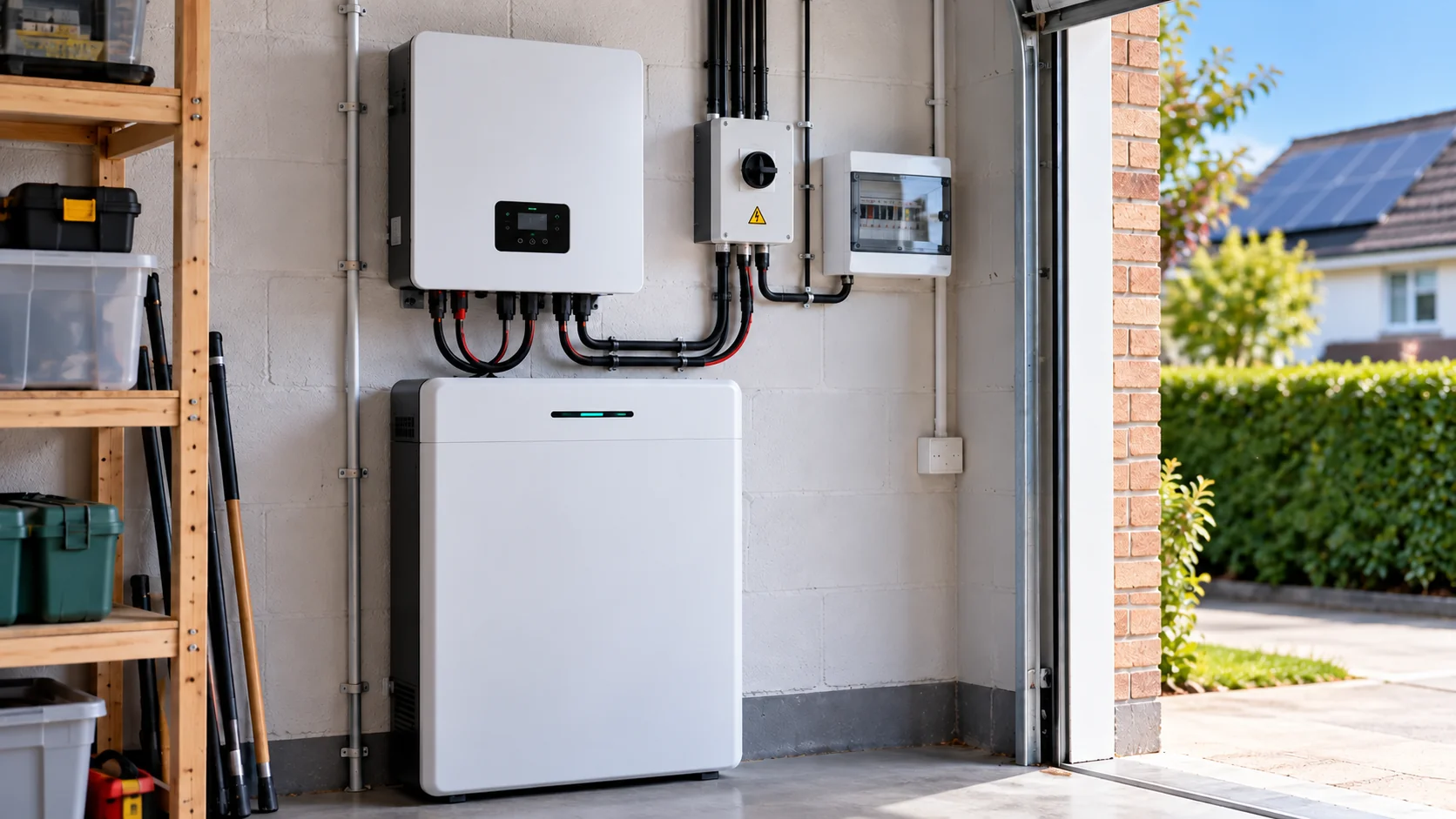
Who qualifies for the €600 battery grant, applying with or without solar, and installer requirements.
Read guide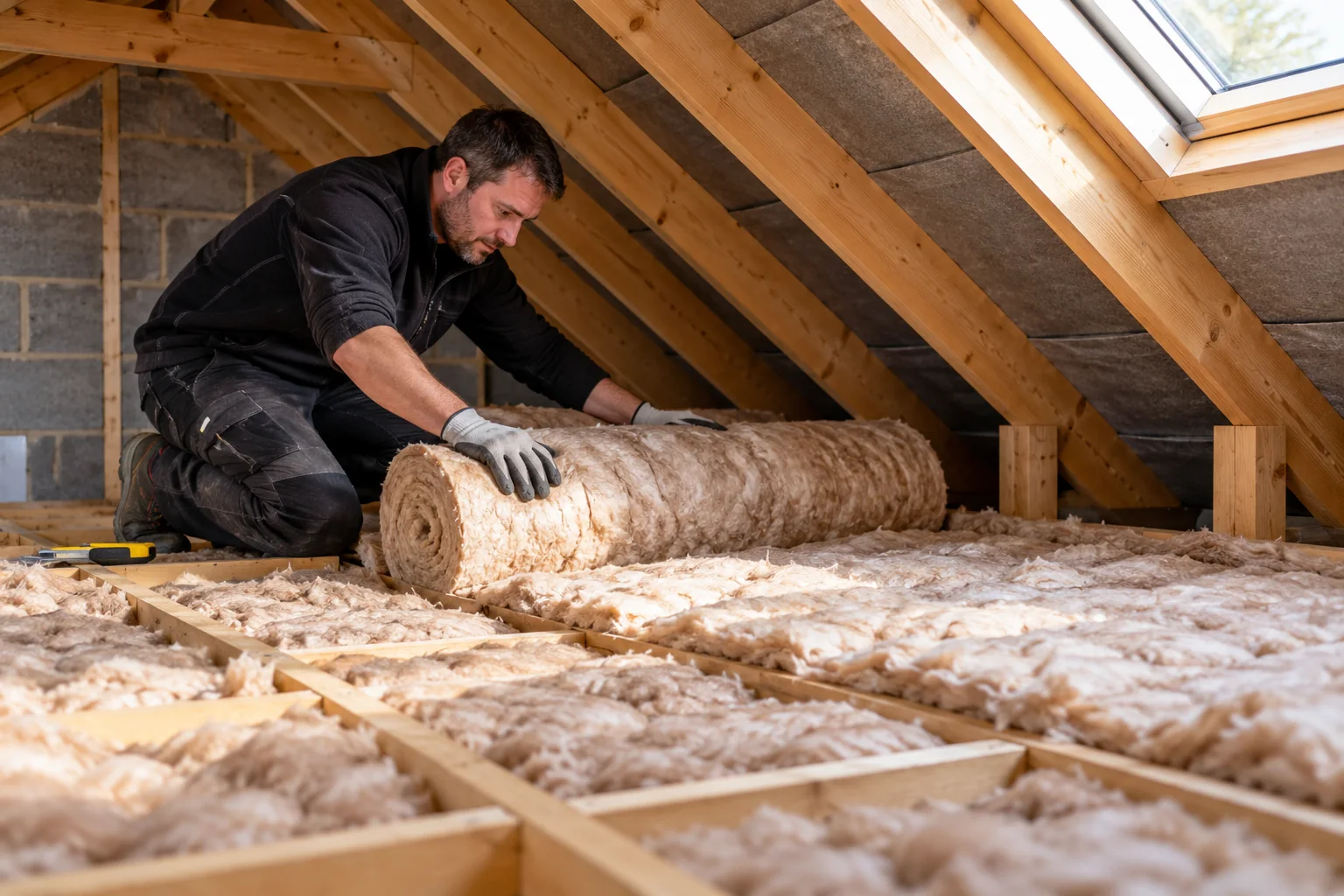
What to check about depth, condition and gaps before deciding whether it needs topping up.
Read guideBefore requesting quotations, check the relevant SEAI scheme page for your chosen measure, confirm your current eligibility and amount directly with SEAI, and think through the right upgrade sequence for your home. Insulation before a heat pump, for example, often makes more sense than the reverse.
Browse installers by upgrade type and county
Review company details before you get in touch
Contact installers directly, with no obligation and no middleman
Upgrader.ie is an independent information resource. We are not SEAI, a Government body or a grant administrator, we do not determine eligibility or approve grants, and we do not currently have installer partnerships. See Our Partnerships.