Topping Up Existing Attic Insulation
Most attics in Ireland already have some insulation. The useful question is not what attic insulation is, it is whether what is already up there is doing enough, and that comes down to depth, condition and a handful of details easy to miss.
Existing insulation needs checking before you add more
Our main guide to Home Insulation covers the different approaches to attic and roof insulation. This article assumes you already have some attic insulation in place and works through what is actually worth checking before deciding whether it needs topping up, replacing, or leaving alone.
Depth is the first thing to check
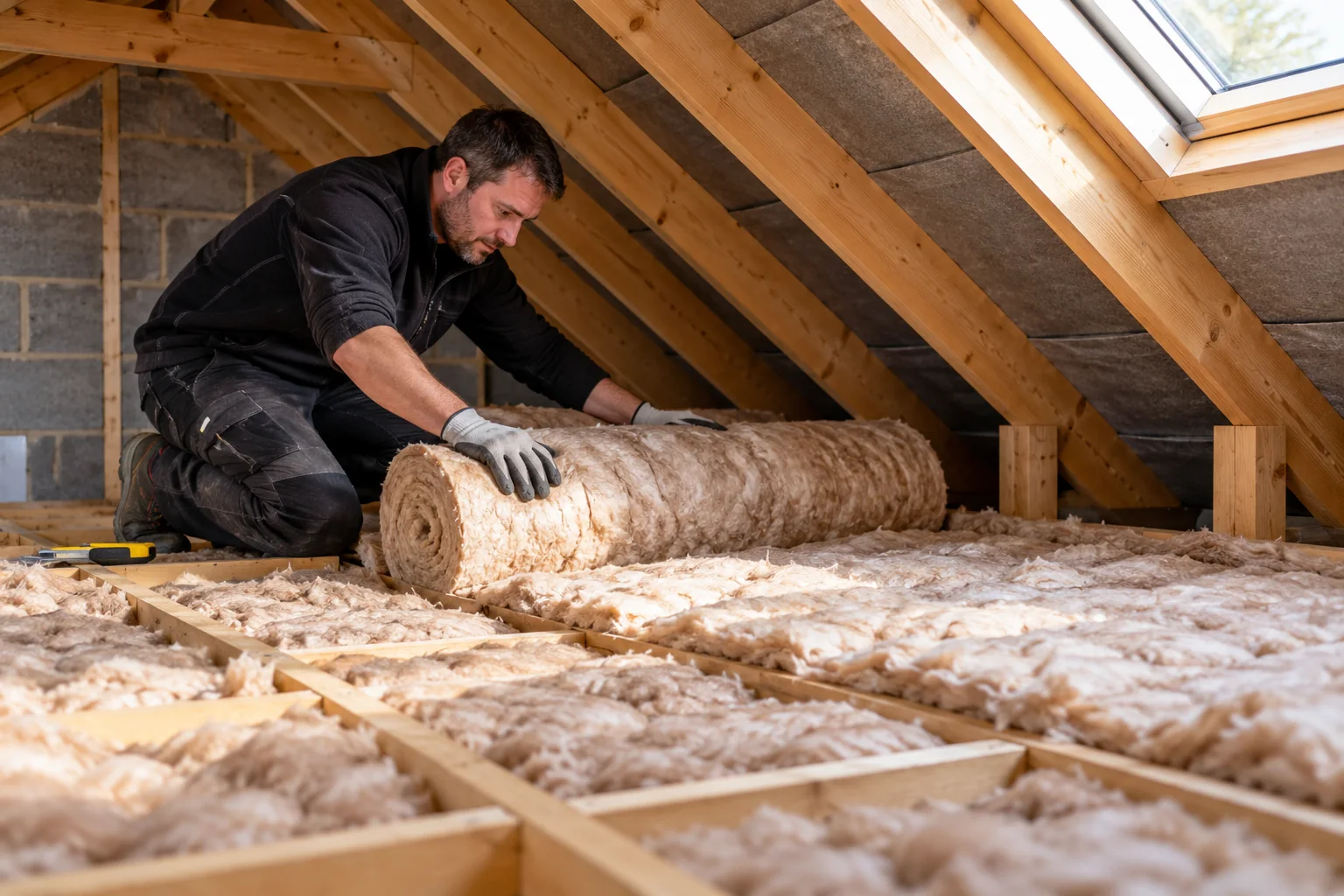
The most common reason existing attic insulation is underperforming is simply that there is not enough of it. Insulation installed decades ago was often laid to a depth that was considered adequate at the time, but current recommended depths for attic insulation are generally greater than older installations achieved, so a layer that looks reasonably thick can still be well short of what is currently considered a good standard. As a practical reference point, around 300mm of mineral wool is the depth commonly cited in Irish guidance for an attic floor. That is not a universal target, since the depth needed depends on the insulation material, what is already in place and the thermal performance you are aiming for, so confirm it with an SEAI registered contractor rather than assuming from how full the attic looks.
Condition matters as much as depth
Insulation that has become compressed, damp, disturbed or patchy performs worse than its nominal depth would suggest, even where the original material is still technically present. Loose fill insulation can settle and thin out over time. Insulation that has been walked on, had boxes stored directly on top of it, or been disturbed by work in the attic can be compressed in patches, which reduces its effectiveness exactly where it has been compressed, not evenly across the whole attic. Any sign of past damp or leaks affecting the insulation is also worth investigating before adding more on top, since insulation that stays damp performs poorly and can point to a roof or ventilation issue that needs addressing in its own right.
Find out where to start with insulation
Our free Insulation Priority Check suggests which measures may be worth looking at first for your home.
Gaps are often the more significant problem
An attic with generally adequate depth can still lose a disproportionate amount of heat through gaps where insulation has been pushed aside, cut around an obstruction and not made good afterwards, or simply never extended into an awkward corner. Common gap locations include around the attic hatch itself, where the loft door often has little or no insulation on its own, around water tanks and pipework, where insulation is sometimes cleared away rather than fitted around properly, and at the eaves, where the roof space narrows and it is easy to leave a thin or missing strip along the edge. A continuous, even layer with no significant gaps generally matters more than an impressive depth in the middle of the attic with weak spots around the edges.
What to check before deciding whether to top up
- Measure the actual depth of insulation in more than one spot, since it is common for depth to vary across the attic
- Look for compressed, patchy or thin areas, particularly anywhere boxes or boarding have been placed directly on top
- Check for signs of past or current damp affecting the insulation itself
- Check the attic hatch for insulation, since this is a common gap
- Check around water tanks, pipework and electrical fittings for insulation that has been cleared away rather than fitted around correctly
- Check the eaves, where the roof space narrows, for a thin or missing edge strip
- Confirm that any ventilation gaps at the eaves have not been blocked by insulation, since the roof space still needs to breathe correctly
When to bring in a registered contractor
Simply topping up an otherwise sound, dry, evenly laid layer of insulation to a greater depth is often straightforward work. Where the checks above reveal damp, significant compression, disturbed pipework or tanks, or ventilation that has been blocked, it is worth having an SEAI registered contractor assess the attic properly before any top up work goes ahead, since piling more insulation over an underlying problem can make that problem harder to identify later. For current SEAI grant amounts for attic insulation and how they are assessed, see our guide to Home Insulation grants and options.