

How to Compare Electricity Plans Using Your Annual Usage
A worked example: two hypothetical offers run through one household's usage, in full.
Read guideAn independent guide to comparing electricity plans and switching supplier in Ireland: what actually affects your bill, smart meters and time based tariffs, solar export, and what to check before you compare, plus a free Electricity Plan Check.
Comparing electricity plans usually starts with a single number: the headline unit rate or discount. On its own, that number can be misleading. A plan's actual cost to your household depends on the unit rate, the standing charge, how the discount is applied, your contract length, your payment method and how much electricity you actually use and when. This guide sets out what to look at beyond the headline figure, explains smart meters and time based tariffs, covers what changes if you have solar panels, includes a calculator for estimating and comparing two plans, and sets out what to have ready before you compare or switch.
An electricity bill in Ireland is made up of several parts, not just a single price per unit. Knowing what each part is makes it far easier to judge whether a new offer is actually better than what you have now.
Discounts are typically applied to the unit rate only, not to the standing charge or the PSO levy. A plan advertising a large percentage discount can still work out similar to, or more expensive than, a plan with a smaller discount but a lower standing charge, once your actual usage is factored in. Always ask what the discount applies to and for the resulting estimated annual cost, not just the headline percentage.
For a fuller breakdown of how each of these charges is calculated, including VAT and actual versus estimated meter readings, see our guide to electricity unit rates, standing charges and discounts explained.
To turn your own unit rate, standing charge and usage into a yearly figure, use the Electricity Bill Calculator below.
Estimate what an electricity plan would cost over a year using your own annual usage and the rates from your bill or a supplier's price list, then add a second plan to compare the two. You enter every rate yourself. This calculator does not show live electricity prices, compare suppliers or identify the cheapest plan.
For each plan, the calculator multiplies your annual usage by the unit rate. On a day and night or smart plan, it applies each rate to your share of usage in that period. It then adds the standing charge, taking a per day figure as 365 days. Any discount is taken off the charges it applies to for the first 12 months, and any welcome credit is taken off the first 12 months only. The figure for the years after that uses the full rates.
Each charge is rounded to the nearest cent, and totals are the sum of the rounded charges, so the breakdown always adds up. Monthly figures are the annual estimate divided by 12; actual bills vary through the year. Differences are worked out from the rounded figures shown.
For the same calculation worked through step by step, see our guide to how to compare electricity plans using your annual usage.
Want to talk through your figures? A member of the comparison team can call you about the electricity plans available through its service.
Request a callback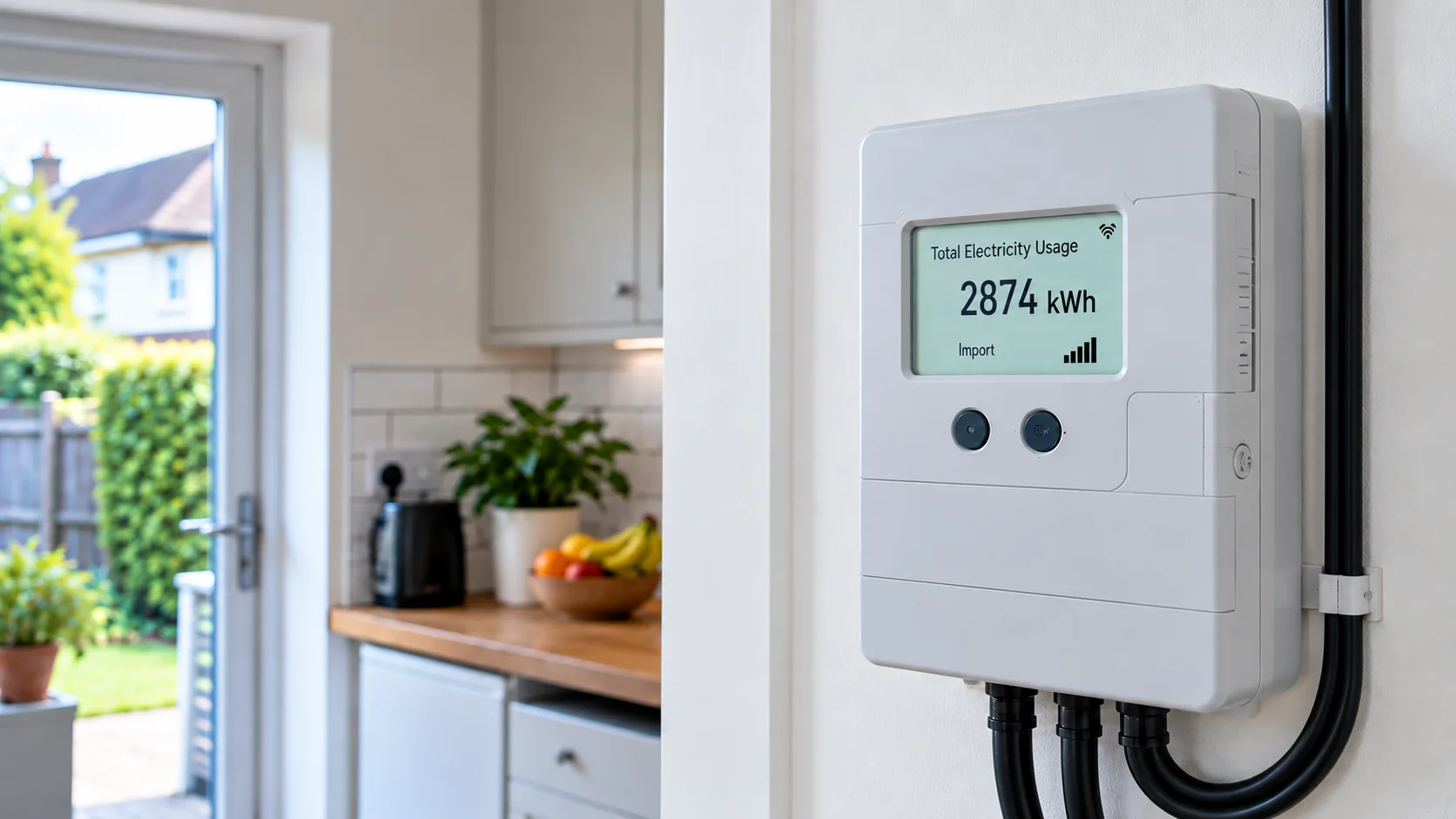
Most homes in Ireland now have, or are due to receive, a smart electricity meter, replacing the older style meter that only records a single running total. A smart meter can record how much electricity you use in day, night and peak periods, which is what makes time of use tariffs possible.
A standard smart tariff typically still charges a single rate for most usage, similar to an older style plan. A time of use tariff charges a different unit rate depending on when you use electricity, generally lower overnight and higher at peak evening times. Whether a time of use tariff suits your household depends on when you actually use most of your electricity, not on the lowest advertised rate on the plan.
If you are not sure what meter type you have, your supplier or a recent bill can confirm it, or you can check directly with ESB Networks, which operates the meters and network across the country.
A time of use tariff only benefits you if enough of your usage genuinely falls into the cheaper periods. A household that mainly uses electricity in the early evening, when many time of use tariffs charge peak rates, can end up paying more on a time of use plan than on a standard rate plan, even though the night rate looks attractive.
For how to read your own usage pattern against a time of use structure, which activities can realistically move to a cheaper period, and what to check before switching tariff type, see our guide to smart meters and time of use tariffs explained.
A household with solar PV has one electricity supplier for both directions: the supplier you buy imported electricity from is also the supplier that pays you for the electricity you export under the Clean Export Guarantee. You cannot keep your import and export with different suppliers, so choosing a supplier means accepting both its import prices and its export rate.
To be paid for exported electricity, your system needs to be notified to ESB Networks using an NC6 form, usually submitted by your installer, or through an NC7 application for a larger mini generation system. ESB Networks processes the notification or application, arranges a smart meter where one is needed to measure your exports, and informs your supplier, which then pays you for the electricity you export. If you switch supplier, your new supplier pays you for exports from the date of the switch, at its own export rate, which may be higher or lower than the rate you receive now.
When comparing plans as a solar PV household, look at the combined position: your import unit rate and standing charge, alongside the export rate on offer, rather than judging either figure on its own. See our Solar PV guide for more on suitability, generation and exporting electricity from your own system.
Beyond the unit rate and standing charge, several other terms affect whether a plan genuinely suits your household.
For a worked example showing how these factors combine into a single comparable figure, see our guide to how to compare electricity plans using your annual usage.
A cheap electricity plan isn't always the lowest-cost option once standing charges, discounts and household usage are taken into account. Before comparing prices, make sure you can answer the following for each plan.
Answer a few questions about your current setup to see what deserves particular attention when you compare plans. This tool does not compare live tariffs, does not identify the cheapest supplier, does not calculate savings, and does not recommend a specific supplier. It is an educational starting point only.
Prefer to talk it through? A member of the comparison team can call you about the electricity plans available to you.
Request a callback
If you would like help comparing electricity plans, you can request a callback using the form below. Your details are passed to our comparison partner, Selectra, so a member of its comparison team can contact you to talk through your current plan and the options available.
For more information about how the comparison service works, see Our Partnerships.
Tell us what you would like help with and a member of the comparison team will contact you.
A member of the comparison team will contact you about your enquiry.
No. Upgrader.ie is an independent information resource. We explain what affects an electricity bill and what to check before switching. Upgrader.ie does not itself operate a price comparison or switching service.
No. Switching electricity supplier in Ireland does not involve any physical change to your home, meter or connection, and your supply is not interrupted during the switch. See What happens when you switch electricity supplier above.
Not necessarily. A discount is usually applied to the unit rate portion of your bill rather than to the standing charge or to charges such as the PSO levy. This means the actual reduction to your total annual cost is typically smaller than the headline discount percentage suggests, which is why the estimated annual cost matters more than the discount figure alone. See Why the headline discount can mislead above.
Not always, but a number of current tariffs are only available with a smart meter, including time of use plans that charge different rates by time of day. Whether one suits your household depends on when you actually use electricity. Check directly with a supplier which tariffs your meter type is eligible for.
If you have solar PV and export electricity to the grid, your export payment is arranged through your own electricity supplier under the Clean Export Guarantee, based on export data recorded by your meter and provided by ESB Networks. The same supplier pays for your exports and supplies your imported electricity, so you cannot keep them with different suppliers. If you switch supplier, your new supplier pays you for exports from the date of the switch, at its own export rate, so compare its export rate alongside its import prices. See If you have solar panels, your export arrangement matters too above.
The Commission for Regulation of Utilities operates an accreditation framework for a small number of price comparison websites in Ireland. Upgrader.ie is an information resource, not a price comparison website, and does not claim CRU accreditation. Confirm the current accredited list directly with the CRU before relying on any comparison site's coverage.
Have a question about your electricity options? A member of the comparison team can call you.
Request a callbackFour companion guides that go further into comparing plans, reading your bill, smart tariffs, and dual fuel electricity and gas plans.
A worked example: two hypothetical offers run through one household's usage, in full.
Read guide
How a bill is actually built, and why a bigger discount is not always the cheaper plan.
Read guide
How time of use tariffs work, and how to check your own usage pattern before switching.
Read guide
Comparing one dual fuel offer with separate electricity and gas plans on the combined annual cost.
Read guideThis page summarises publicly available guidance current as of September 2026. It is not a substitute for checking directly with the bodies below, and figures, rates and scheme details can change after publication.
October 2026: Added the Electricity Bill Calculator, which estimates and compares annual unit and standing charges from rates you enter.
Electricity is one part of your household bills. Browse our other Home Upgrades and Household Services guides to see what else could suit your household.
Explore Household Services