Smart Meters and Time of Use Electricity Tariffs Explained
A smart meter does not by itself make your electricity cheaper. What it does is make it possible to be charged, and to check your own usage, by time of day rather than as a single running total. Whether that is worth acting on depends on your own household's habits, not the meter itself.
What a smart meter actually does differently
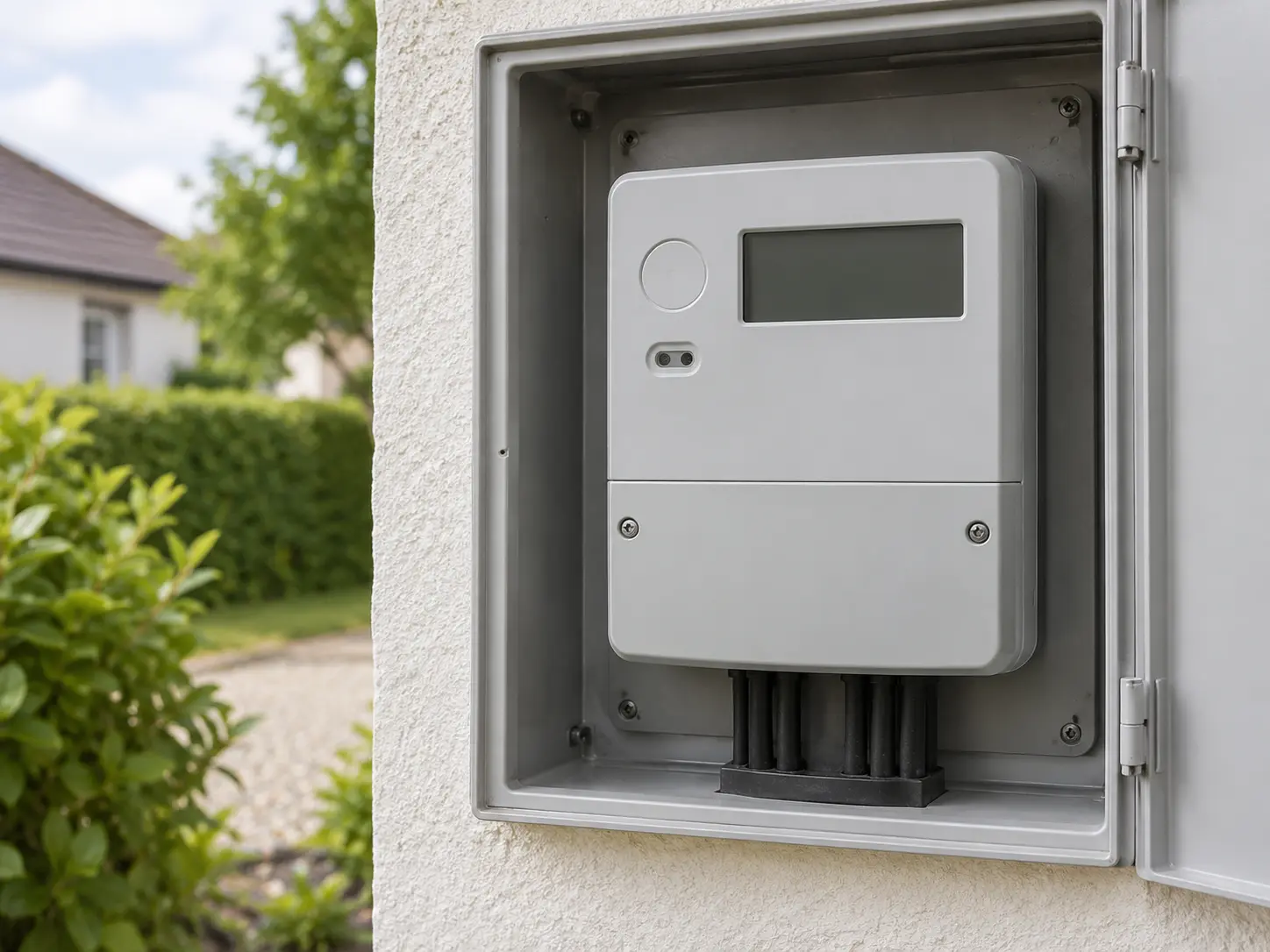
An older style electricity meter records a single cumulative total, which is why it typically needs a periodic manual reading or a supplier estimate to bill accurately. A smart meter instead records your electricity use in short, regular intervals and can send that data back to the network without anyone needing to read the dial. This is what makes it possible for a supplier to bill you based on when you actually used electricity, not just how much, and it also reduces how often an estimated reading is needed, since the meter is reporting real usage on an ongoing basis. It does not remove estimated readings entirely: a data connection problem or a supplier's own billing setup can still produce one occasionally, so a smart meter is not an absolute guarantee against ever seeing an estimated bill again.
Having a smart meter fitted does not automatically move you onto a time of use tariff. Many households with a smart meter remain on a standard rate plan that charges a single unit rate regardless of the time electricity is used, and that can be the right choice if your usage does not suit a time based structure. Our main guide to electricity in Ireland covers meter types more generally alongside the rest of what affects a bill.
How a time of use tariff is actually structured
A time of use tariff divides the day into bands, commonly described as peak, day and night, and charges a different unit rate in each. The general pattern is a lower rate overnight, when demand on the network is lowest, and a higher rate during an early evening peak period, when household demand across the country tends to be at its highest. Ireland's standard smart tariff uses a common set of band hours across suppliers, but many suppliers also offer alternative smart plans, such as a weekend discount, a short overnight boost window, or a flat rate with no time bands at all, and it is these alternative plans whose hours and structure are set independently by each supplier. Check which type of plan you are looking at, and its specific band hours, rather than assuming a general description like the one here applies to every plan.
This structure exists because the cost of generating and supplying electricity genuinely varies by time of day, and a time of use tariff is one way suppliers pass some of that variation on to customers, alongside an incentive to shift usage away from the highest demand periods where practical. The standing charge, VAT and PSO levy on a time of use plan work the same way as on any other plan, only the unit rate portion changes; see our guide to unit rates, standing charges and discounts if you have not already read how those other charges are calculated.
A dynamic tariff goes a step further. Instead of fixed bands, the unit rate can change every 30 minutes in line with conditions in the wholesale electricity market, and the CRU has required the largest suppliers to offer a standard dynamic price contract from 1 June 2026. This can suit a household that can genuinely move demand to cheaper periods, such as charging an electric vehicle, charging a home battery, or a heat pump pre heating a hot water cylinder. It also exposes you to periods when the half hourly price is well above a typical fixed rate, so it is a poor fit for a household whose usage is hard to shift.
Reading your own usage pattern before you switch tariff type
The decision that actually matters is not whether a time of use tariff has an attractive night rate, it is what share of your own household's electricity use already falls into the cheaper periods versus the more expensive ones. A household with a smart meter can generally view a breakdown of its own usage by time period through its supplier's online account, or, if that does not go into enough detail, by asking ESB Networks directly whether a more detailed usage service is available for your meter. This is worth doing before switching rather than after.
As a rough starting point, a household that already does most of its heavy electricity use overnight, for example running a dishwasher or washing machine on a timer, charging an electric vehicle overnight, or heating water overnight for later use, is a stronger candidate for a time of use tariff than a household whose heaviest use clusters in the early evening, which is when many time of use tariffs charge their highest rate. Looking at your own recorded usage by time band, rather than guessing from habit, is the only reliable way to judge this.
If your meter is already smart, moving from a standard rate to a time of use tariff is normally a change to your contract and billing arrangement with your supplier, not a request for new metering equipment or a site visit. Confirm this directly with whichever supplier is offering the tariff, since arrangements can differ if your specific meter needs to be reconfigured first.
Not sure whether a time of use tariff suits you?
A member of the comparison team can call you to go through the electricity plans available through its service.
Which household activities are genuinely movable
Not every use of electricity in a home can realistically be shifted to a cheaper period, and it is worth being honest about the difference before assuming a time of use tariff will change your habits. Activities that can often be delayed with a timer or a delay start function, such as a dishwasher, a washing machine or tumble dryer cycle, or charging an electric vehicle, are the most straightforward to move into an off peak window without materially affecting the household. Activities tied to when people are actually home and awake, such as cooking, lighting, or a shower, are much harder to shift without a genuine change in routine, since they happen when they happen for reasons unrelated to the price of electricity at that moment.
A heat pump sits in between these two categories. Some heat pump controls allow pre heating a hot water cylinder or, to a more limited extent, a building's thermal mass during a cheaper period, but this depends on the specific heat pump, its controls, and the property's heat retention, and is a question worth raising with a heat pump installer directly rather than assumed. Our guide to heat pumps in Ireland covers heat pump operation more broadly.
The practical limits of shifting usage
Even in a household that actively tries to shift usage, a meaningful share of everyday electricity consumption tends to stay tied to when people are actually in the home, which limits how much of a bill a time of use tariff can realistically improve. A time of use tariff is also, in effect, a bet that the savings on the portion of usage you do shift outweigh paying a higher peak rate on the portion you cannot or do not shift. For a household whose usage is heavily concentrated in the peak evening window, a standard single rate plan can remain the better fit even with a smart meter installed, and there is no requirement to move to a time based tariff simply because the meter supports it.
Time of use tariffs, solar PV and battery storage
A time of use tariff becomes relevant to a solar PV household in a second way, separate from ordinary household consumption. Many home batteries can be charged from the grid as well as from solar panels, and on a time of use tariff with a genuinely cheap overnight rate, a battery can be set to charge overnight and discharge during the more expensive evening period, independent of how much the sun generated that day. Our guide to solar batteries in Ireland covers this in more detail, including how usable capacity and warranty terms are affected by charging a battery from the grid as well as from solar. If you export surplus solar electricity under the Clean Export Guarantee, see the solar export section of our main electricity guide for how that arrangement sits alongside your chosen import tariff.
What to check before switching to a time of use tariff
Before moving from a standard rate to a time of use tariff, confirm the specific band hours and rates that plan actually uses, since these vary by supplier, and check them against your own recorded usage pattern rather than a general assumption about when electricity is cheap. It is also worth checking whether the plan comes with any contract length or exit fee, in the same way you would for a standard plan, and confirming your meter is registered as smart and eligible for the specific tariff on offer.
Before switching from a standard rate to a time of use tariff
- Confirm you have a smart meter, and that it is eligible for the specific tariff on offer
- Review your own usage broken down by time period, through your supplier's account or ESB Networks' usage service
- Check the specific peak, day and night hours that plan uses, since an alternative smart plan can set its own hours and structure rather than following the standard smart tariff
- Identify which of your household's activities could realistically move into a cheaper period, and which cannot
- Check the unit rates in each band, not just how low the cheapest one looks
- Check contract length and any exit fee, the same as for a standard plan
- If you have solar PV, consider whether a battery charging from the grid overnight is relevant to your decision
For a worked example of how a discount, unit rate and standing charge combine into a single comparable figure, see our guide to how to compare electricity plans using your annual usage, or return to the main guide to electricity in Ireland.