Full Fibre, Part Fibre and Mobile Broadband Explained
Providers describe connections by the technology behind them, not by a plain description of what that technology means for your home. Here is what each term actually refers to, and what it changes in practice.
Why the connection type behind a plan matters
Our main guide to broadband in Ireland lists the connection types you might be offered at your address. This article goes further into what actually separates them, since two plans advertising similar speeds can behave quite differently depending on the technology delivering them, particularly for upload speed, consistency at peak times and what happens as more people in your area use the same infrastructure.
Full fibre: fibre all the way to your home
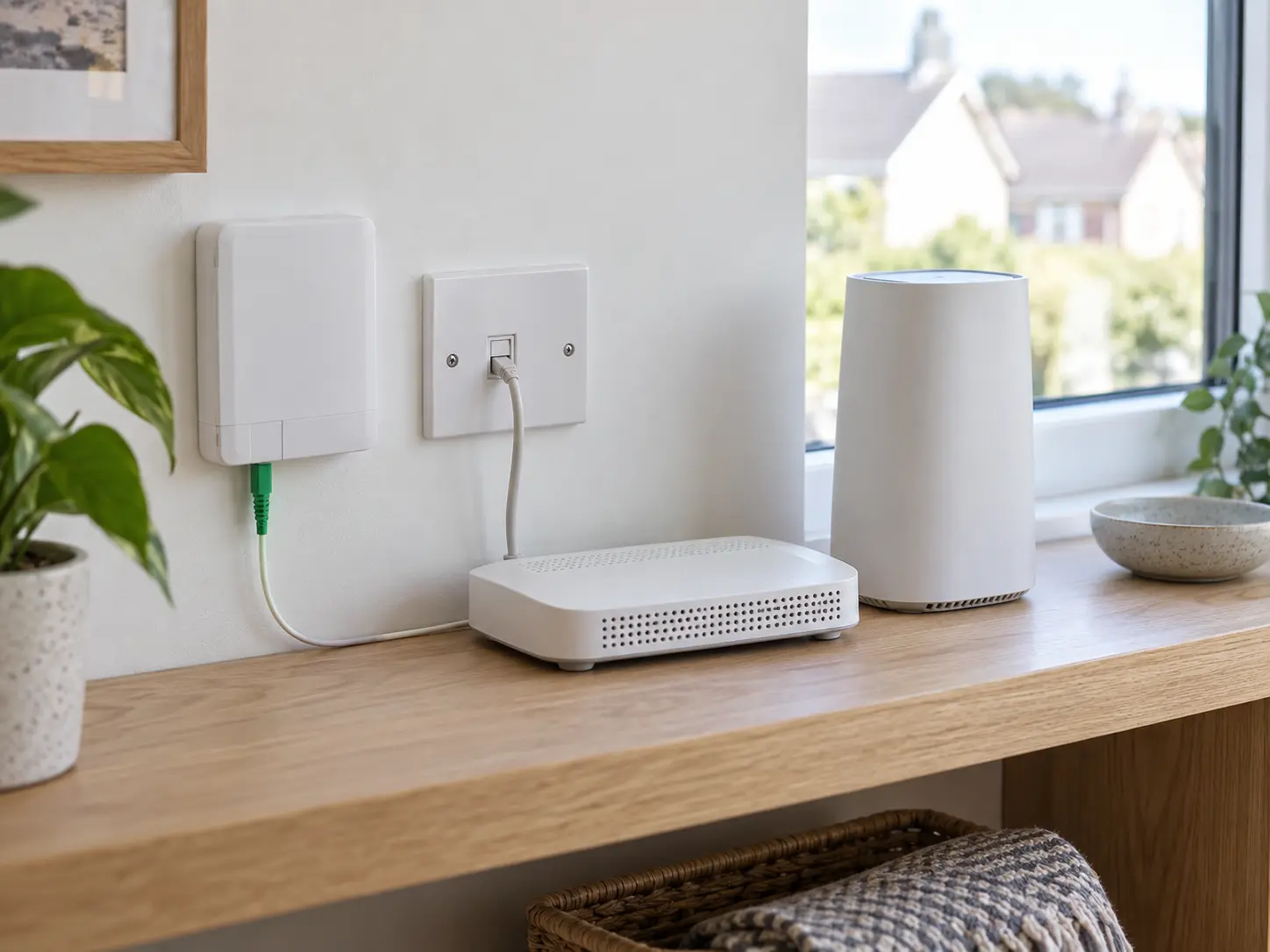
Full fibre, sometimes labelled FTTP or FTTH, means a fibre optic cable runs from the network all the way into the home, rather than switching to copper wiring for the final stretch. Because the fibre connection is not shared over a copper line whose performance depends on distance, full fibre generally supports the highest speeds on offer and tends to deliver upload speeds much closer to its download speed than older technologies, which matters if video calls or cloud uploads are a regular part of your household's use.
Full fibre coverage has expanded significantly across Ireland in recent years, both through commercial rollouts in towns and cities and through the National Broadband Plan reaching many rural areas that were not commercially viable for providers to build out on their own. Coverage is still not universal, and being inside a rollout area is not the same as being ready to order a connection today, so checking your own address directly remains the necessary first step, covered in the main guide's section on checking availability.
Part fibre: fibre most of the way, copper for the final stretch
Part fibre connections, commonly described as fibre to the cabinet or FTTC, and delivered using VDSL technology, bring fibre to a street cabinet near your home, then complete the final connection over the existing copper telephone line. Because copper carries a signal less efficiently than fibre, and loses performance over distance, the speed you actually get on a part fibre connection depends heavily on how far your home sits from that cabinet, which is why two neighbours on the same part fibre network can see meaningfully different real world speeds despite being sold the same headline plan.
Cable broadband, delivered over a coaxial cable network rather than a telephone line, sits in a broadly similar category in practice: capable of high speeds where the network passes an address, but historically sharing capacity with other users on the same local network segment at peak times to a greater degree than a full fibre connection does.
Not sure which connection reaches your address?
A member of the comparison team can call you to go through the broadband plans available through its service.
Mobile and fixed wireless broadband: no cable into the home at all
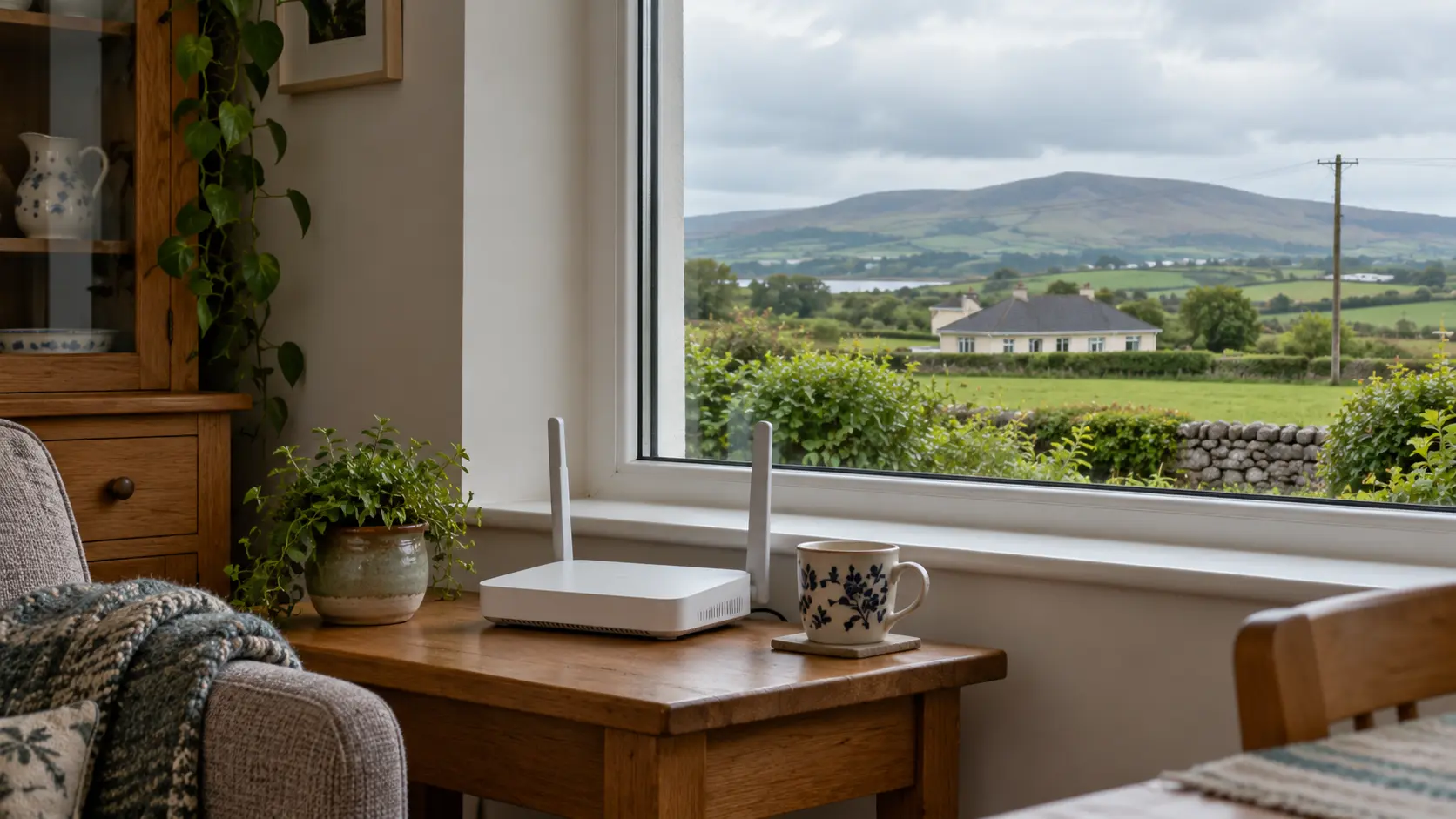
Mobile and fixed wireless broadband, including services marketed around 4G or 5G home broadband, deliver a connection wirelessly from a mobile network mast rather than through any cable running into the property. This is often the most practical option where fixed line infrastructure, whether copper, cable or fibre, has not yet reached an address, and it can generally be installed quickly since there is no line to run.
Performance on a fixed wireless connection depends on distance from the nearest mast, the strength of signal reaching your specific property, and how many other users share that mast's capacity at busy times, all of which vary by location in a way that a national speed figure cannot capture. Satellite broadband sits at the far end of this category, generally considered only where no other option reaches an address, such as some more remote rural properties, and can involve materially higher latency than the other connection types described here, which matters for anything sensitive to delay, such as video calls or online gaming.
For fixed broadband, providers are required to include four separate speed figures in your contract: the minimum, the normally available, the maximum and the advertised download and upload speed for your plan. Mobile internet contracts work slightly differently and state an estimated maximum and an advertised speed rather than all four figures, reflecting how much more that connection type is affected by your specific location. Either way, these figures describe what the connection type is capable of under the conditions stated in the contract, not a promise that you will see the maximum figure at every moment. If your actual speed persistently and significantly falls short of what your contract states, that is a matter to raise directly with your provider, referencing the figures in your own contract rather than a general marketing claim.
Why the technology name is worth asking about directly
Marketing material does not always lead with the underlying technology, sometimes describing a plan mainly by its speed or its price. When comparing offers, ask directly whether a plan is full fibre, part fibre, cable or fixed wireless, since this affects more than the headline speed: it affects how consistent that speed is likely to be at busy times, how the upload figure compares to the download figure, and, for part fibre in particular, how much your own specific distance from a cabinet might affect what you actually receive versus a neighbour on the same street.
Questions worth asking about the connection technology behind a plan
- Is this connection full fibre, part fibre, cable, fixed wireless or satellite
- If it is part fibre, is there a way to estimate distance from the local cabinet before committing
- What is the upload speed, not only the download speed
- What are the contracted speed figures for this specific connection type: minimum, normally available, maximum and advertised for fixed broadband, or estimated maximum and advertised for mobile
- For fixed wireless or satellite, what latency should be expected, particularly if calls or gaming matter to your household
Once you know which connection types are realistically available to you, see our guide to what broadband speed your household actually needs to work out what to look for within those options, or return to the main guide to broadband in Ireland for how to check availability and compare plans.